Showing posts with label school. Show all posts

Friday, August 19, 2011

Time for Finals: The End of Back-To-School Week!

I hope this week has been educational and encouraging for you! If you missed our previous posts on homeschooling, private schools and public schools, please go back and read them when you get a chance. I think you will enjoy the variety of answers and explanations in the moving mommy testimonials.

As we close out our back-to-school week and head into the weekend, I'm hoping we can take a few things with us:

Don't assume anything. There are many great options for schooling today—we are blessed to have the freedom to educate our kids as we choose. Let's not take that for granted! Yes, each option carries a variety of pros and cons, but from reading each and every mommy testimony this week, there is no doubt that we all have the well-being of our child in mind.

When you are having a rough day or a rough week, make your own list of benefits. Think and consider the reasons you chose to send your child to that school or homeschool and pray first—focusing on the benefits and blessings.  As we have seen, each option has a fair amount of challenges—avoid constantly fixating on the negatives! 

Have open discussions with your friends. We can learn from each other and pray for each other as we disciple our kids;  we are also being educated in our different environments along the way.

As I asked for these testimonials, the answer I received from Tessa did such a nice job summing up the week, I decided to save her sentiments for today. I'm going to end the week with some of her thoughts here:
~~
Tessa:
I have learned never to say "never" especially in the realm of schooling! We have done all types of schooling (Christian, public and homeschooling). I said as a school teacher---I would NEVER do public or home school---I ate my words. 
Some of our reasons were spiritual, financial, social, and convenience. But ultimately, each year's decision--and each school we have chosen has been based on much prayer and seeing God direct exactly what each child has needed. We have seen benefits and road blocks at every type of school. What kept us going was KNOWING God clearly led in that decision and it helped to keep us going and plowing ahead--especially on days when we wanted to throw in the towel or jerk our kids out of the situation. Instead---we went back to the point that God led us there that year (Wherever it was) and sought how to remedy any of the situations from a Biblical perspective. 
It has been a great learning tool for ALL of us. When things were not as they should be in the Christian School classroom, it gave us a great way to discuss it with our child—how to respond in a Biblical way and pray much. When it was in a public school setting, it gave us (and our child) a great way to witness, take a stand, but most of all show Christ-like behavior in handling situations. It gave us confidence because God sent us there. With homeschooling, it has given us perseverance and has given us a lot of great quality time of teaching Biblical perspectives. With homeschooling, I really felt like it has exposed much that I need to change in my own spiritual life---especially as I respond to situations with my "students." 
I sincerely believe that prayer and walking with God is the KEY to parenting a school age child and making these huge decisions. It helps as you make the decision, as you enter each day, as you face the trials of each type of schooling, and as you disciple your child as they walk through each day. Total dependence on God is what has gotten us through---and the days I depended on my own strength---we have barely survived! 
Prayer truly works; even to change the teachers, the situations, and the child! Teaching our children to pray has been key as well! 
The most important lesson we have learned (as we now have a SENIOR!) is that no school or church ever replaces the discipleship a child needs from their own parent. A parent is VITAL in any school situation to reinforce, pray with, disciple, teach about God's ways---and it takes BOTH parents---it can never be left up to any institution to give your child the spiritual reinforcement the parent should give at home. You and your husband have to decide what you feel like God is leading you to do for each child. Others decisions really can't influence that, because God shows each family what is best and where they may minister best. Nothing is easy, but God gives grace and strength wherever He leads!
~~

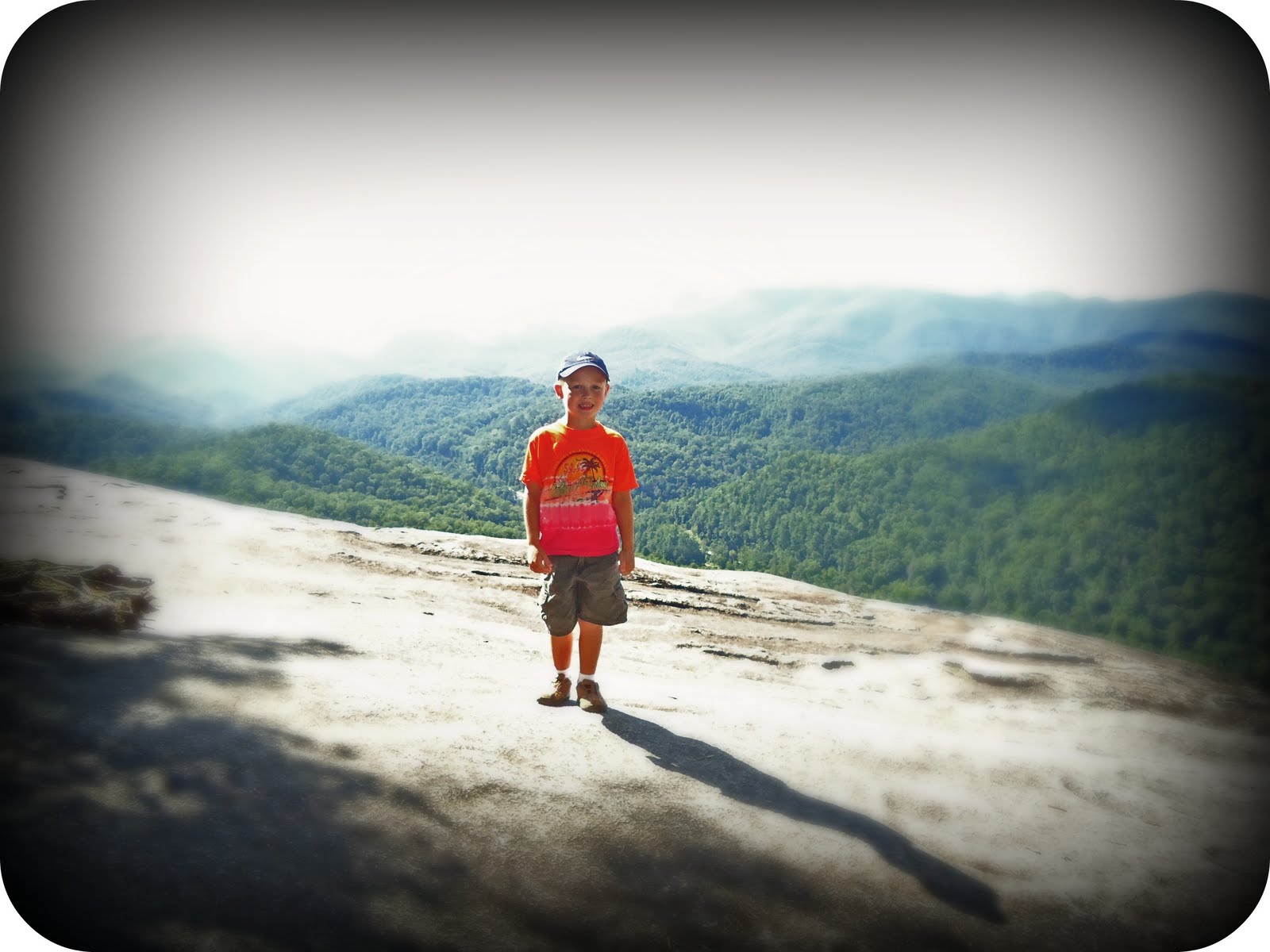
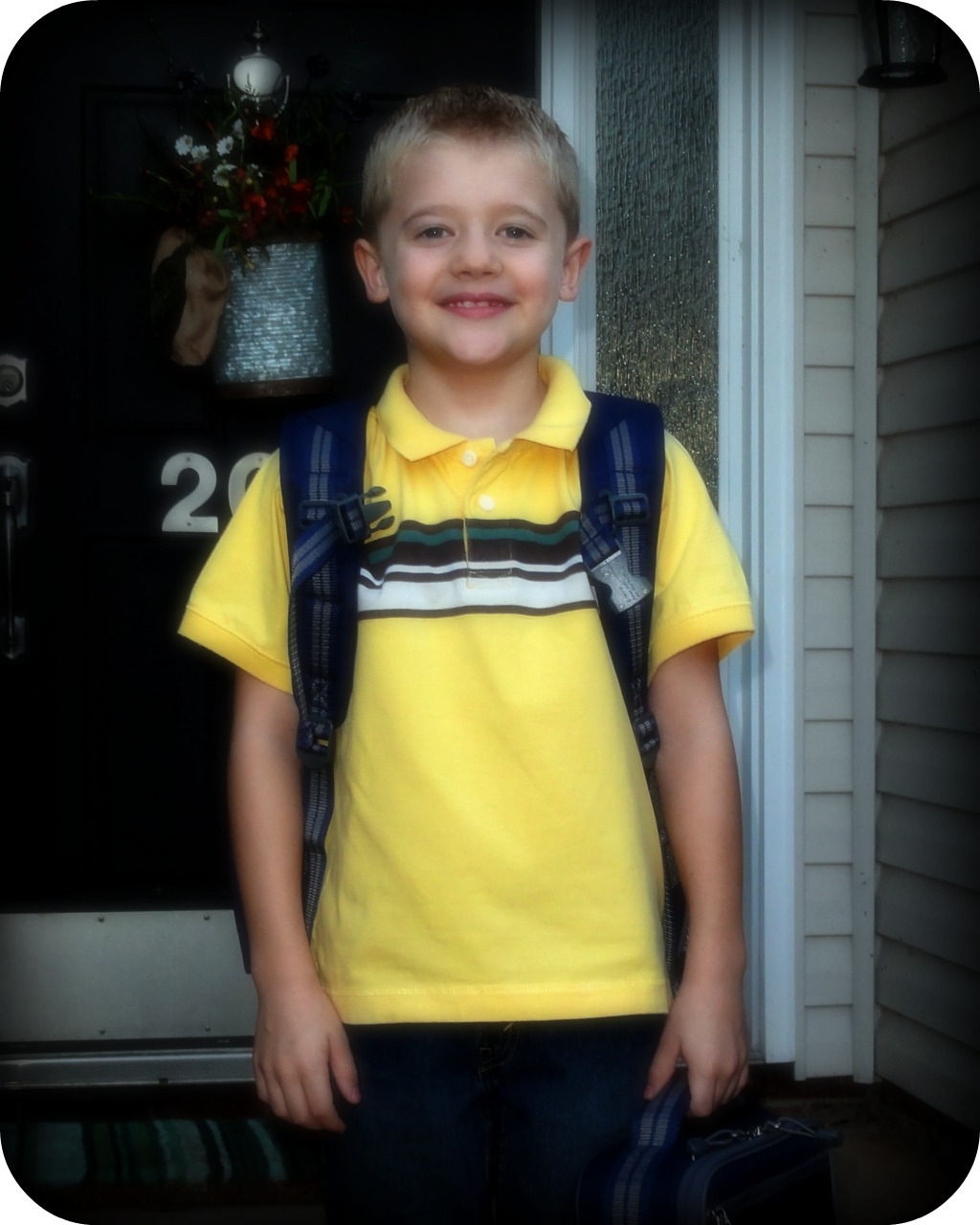
Last week my baby climbed a mountain. I'm hoping it will not be his last, and I predict many more mountains of all shapes and sizes will rise up in his future.   Let's pray for wisdom as we guide our babies--showing them the path and giving them encouragement, but ultimately letting them carefully place one foot in front of the other. 

**Thanks again to everyone who participated, and have a great school year!**     

Thursday, August 18, 2011

The Christian School Choice: Let's discuss this wonderful option!


It's still back-to-school week! For the past 3 days we have been discussing school options. So far we have talked about homeschooling and public schooling. If you missed the previous posts, please go back and check them out. Our first-hand mommy testimonials will inspire you! Today we are taking a closer look at another great option for our kids: Private/Christian Schools.


Christian School History:
In 1559 John Calvin himself founded a school, the Geneva Academy, and he was very influential in creating Christian schools throughout the city of Geneva. Calvin understood that for the effects of the Reformation to continue, providing children a Christian education was essential. John Knox helped form Christian schools throughout Scotland, and these schools operated in conjunction with both the church and the state.” (Walter G. Fremont, Teacher to Teacher, October 2003 issue) There is a great summary and additional information here
.  

In the late 1700's, Sunday school became popular throughout England and the US. Eventually this lead to an intense level of education, evolving into formal Christian Education as we know it today.


Christian School Facts:
Approximately 4 million students, 1 child in 12, go to Christian schools. In America, since religion is not taught by state-funded education systems (unless they are extracurricular), many parents choose to send their kids to a Bible believing school.
Several large Christian School groups are: The Association of Christian Schools International (ACSI) which serves 5,300 member schools in 100 countries with 1.2 million students, and Christian Schools International, with approximately 500 schools and 100,000 students.
Another Christian school movement on the rise in the US is classical education which is attempting to return to traditional subjects, and is represented by the Association of Classical & Christian Schools, with over 230 schools and colleges, and about 34,000 students.

Christian School Methods
During the 1950's and 1960's Christian publishers began producing educational texts and materials; today a wide variety of Christian textbooks are available to all grade levels.  The goal of Christian publishers is to create quality biblical and educational materials.
Some feel that pastors should teach their congregation the importance and value of Christian education, as well as encouraging Universities to train quality Christian teachers.
Conservative Protestant Christian schools are privately run, typically in conjunction with a church or denomination.
Parents typically choose to send their kids to a Christian school because they want their children's education to be based on principals that are similar to those of their church. Unless these schools are subsidized by their church, or a part of a school voucher program that is government funded, they must pay tuition.
Although some Christian schools are large and well-funded, many others are small and rely on volunteers from the community.

**Testimonial Time! Let's hear from our experts!**

Why did you choose to send your child to Christian School?
Anna H.
  • Our family has chosen to send our boys to a Christian school. The easiest way to explain our decision is to divide it into two parts: why we chose school as opposed to homeschooling and why we specifically chose a Christian school.
  • Education at a school is not necessarily "tailor-made" to each student. I realize for a struggling learner this may be an issue, but it gives most students a wonderful opportunity to grow, adapt, be stretched, etc. This might sound odd, but school can even give students a chance to fail at something. Now, I'm not saying that I want my boys to fail. But if they do, it will be yet another great life lesson. We can sit down and evaluate what happened and how to prevent it in the future.
  • I also really appreciate having other objective opinions of my children. Teachers spend many hours with their students and can view them without their parents around. No matter how hard we try, parents are not objective. Especially as our boys get older, I look forward to having yet another resource to help determine how they are doing spiritually, academically, and socially.
  • We specifically chose a Christian school because of the spiritual influence it can have in our boys' lives. I'm perfectly aware that sending them to a Christian school does not guarantee that they will be godly. However, I don't have to worry about the underlying philosophy that they are being taught. I don't have to "reteach" certain things after they get home because of a secular world view. I don't have to worry about what a teacher is going to say, music that will be heard, etc. I can count on the fact that the school is philosophically an extension of our home and church.
Keri L.
  • We chose private education for a few reasons. First of all, my husband and I both loved going to school and wanted that experience for our children. We loved the idea of them going to school but also having the school be an extension of our worldview for their young formative years. The second reason was because my son has a September birthday. He was ready for kindergarten and we did not want to hold him back. Public school was simply not an option. We felt very comfortable with the private school we chose. My husband attended this same school from 4th grade through high school so we knew what to expect and already had relationships in place. Like many parents, we take our school decision year by year. We are not opposed to public school as an option for our family in the future. Also, I have a career which would make homeschooling difficult, if not impossible, to do well.
Joy W. 
  • We are sending our kids to a private Lutheran School for the first time this year. We previously tried homeschooling, as well as a public charter school. Homeschooling didn't go well for me. (I think I am not as far in the sanctification process as other homeschooling moms must be!) Plus, my kids do really well in school for their teachers - they work hard and get good grades. They seem to benefit from the structure and I have more time with the little ones.
Brenda H.
  • There were several factors that went into choosing a Christian school.  I would love to home school due to my girls' hearing problems. (Although I never imagined home schooling...!) I feel that they operate best on a one-on-one basis. But that's not possible for our family since I teach.
  • As for Christian vs. public, I feel that it's important to give children that chance if possible. I know it's not for everyone. My kids have contact with "the world" in many other venues, but I love that their focus at school is on loving the Lord and how He loves us.


What are the Greatest Benefits of going to a Christian School?
Anna

  • I personally believe that there are a lot of benefits to a traditional school/classroom environment.  On a very practical level, a traditional classroom allows children to learn to sit still, listen, work independently, work with a small group, stay on task, follow a schedule, etc.
  • Many schools offer a variety of activities under one roof: languages, PE, art, music, computer, library, band, orchestra, speech, piano lessons (or other instruments), etc.
  • Kids learn how to work with a variety of teachers and may even at times have the opportunity to work with one that is not necessarily their "favorite." What a great life lesson!
  • Another great life lesson for some kids is the realization that they are not necessarily the smartest kids on earth! There are other kids in their classes who are smarter or faster at what they are doing. They need to learn to be humble about their God-given abilities. They may even have opportunities to help others in a "peer-tutoring" situation.
  • At the other end of the spectrum, kids who struggle can learn that they are not alone. Other kids struggle too. Many schools offer help for struggling learners, and again a "peer-tutoring" situation may also help.
Keri L.
  • The benefits of private education are plentiful. The teachers and most of the parents share our worldview so my son does not come home confused about who God is or His importance in our lives.It is an extension of what we are already teaching him at home. I doubt I would ever be disciplined enough to homeschool. Because of private education, I know my son is learning doctrines, verses, as well as all his reading, writing, and math at a higher standard than I would be capable of at home. Smaller class sizes, consistent discipline, and education quality are just a few more of the great advantages to private school.
Joy W.
  • The benefit of a Christian school will be the extra spiritual encouragement I hope my kids will receive from teachers as well as Christian friends, which they didn't have at their charter school. I feel like I can use any extra help I can get.
Brenda H.
  • Well, I partially answered that in the last one. A biblical worldview is important to me. I know I am responsible to share that with my kids, but it helps to have teachers who can assist me in that. I also love that it's a smaller school and I have more access to my kids.


What are the greatest challenges in Christian Schooling?
*Also, is placing your child directly into a Christian-only environment giving your child a disadvantage?

Anna:

  • For those that worry that kids will be isolated or in some sort of "Christian bubble," I completely disagree. There will be ungodly kids even in a Christian school. Unfortunately, there will also be ungodly people in the youth group, on sports teams, at their work, and even possibly among close family and friends. Sadly, our children will have plenty of opportunities to experience the "real world" no matter what school choices we have made. At a Christian school, my boys will hopefully be able to begin showing discernment and leadership while in a safe environment. We will closely evaluate their friends. And as I mentioned earlier, the teachers will give us yet another godly, objective resource when we have questions about who our boys hang around, what kind of leaders they are at school, how they act out of our sight, etc.
Keri L.
  • The challenges to private school at this young age are small in my opinion. It was my experience having been through private and public school that the challenges are more evident as children get older.The pressure to please through outward behavior without heart motivation is the biggest challenge from my view. Also, with the exception of sports, private school kids are not exposed to other worldviews, I think this is a good thing for young children. As they get older I hope they will have more interaction with people so they can learn how to stand on their own for what is right.
Joy W.
  • There are several challenges that go along with using a Christian school. First, the finances, but we found a very reasonably priced school out in the country - I think Lutheran churches are very good at supporting their schools, so it costs less for tuition. Second, finding a Christian school that lines up with your families convictions as far as worship and theology can be a bit hard.
Brenda H.
  • Well, having gone through Christian school myself, it is obvious that imperfect people (including me and my children!) make those Christ-centered ideals I just mentioned harder to attain. A focus on outward conformity at school can cause our hearts to become hard to the Lord. I try to be transparent with my kids and talk about my relationship with God--how I make mistakes, but He loves me no matter what I do. I hope and pray that this will help us to be honest and focused on the heart, not the outside.
  • One more hard thing:  the logistics of school--due dates, start times, vacation days. I would love the flexibility of making my own schedule at home school.

**Extra Credit!**

  • Again, there are many sources and history available to you here.
  • I would love to hear more about any resources you might want to share here!


Thanks so much to my testimonial moms! We are winding down our series on Back-to-School and I appreciate the feedback and comments I have received from everyone.  Please don't be scared or intimidated to share your opinion.  We would love to hear from you--there are really no "right or wrong" answers on this test!
Tomorrow we will do a quick run-down and summary to wrap up the week.  I hope everyone has had a productive and fun week back at school!


Wednesday, August 17, 2011

Public School 101: Education on Public Education.


You are sending your kids where? Yes, it's true. That big brick building up the road, the one that says Public Elementary School on the sign, is still up and running, and most likely it is actually brimming with kids.

This week we are discussing the ins and outs and why and why-nots of the school options available to our kids. If you want to get caught up by reading the previous posts, please go here.  And to find out about the option to homeschool, please click here.
Today, we are talking about the big Public Schools!

Public School History:
Many say that 17th century bishop John Amos Comenius was the earliest advocate for public school. He wanted all children to be educated—not just the rich and powerful. The first American tax-payer-funded school was in Dedham, Massachusetts (Boston) in 1643. The original purpose by these founders was to teach children to read so that they could understand the Bible.
Horace Mann (1796-1859) is considered one of the founders of the modern American public school system, if you want to look him up. Some consider his impact to be a negative/socialistic one, but mostly he was a crusader for universal education for all classes in America. Thanks in part to Mann, by 1870 most states provided free elementary schooling.
There is a lot of information on the history of public schooling if you are interested, do a quick search! Here is one neat resource from PBS. http://www.pbs.org/kcet/publicschool/

Formal schooling in a classroom setting has been the most common means of schooling throughout the world, especially in developed countries, since the early and mid 19th century.”

Interesting Public School Facts:
Whether we like it or not, about 9 out of 10 kids go to public school, and this number does not seem to be declining. 
80% of Evangelical Christians still place their children in public schools even though Christian schools have been around for 50 years, and the homeschool revolution has been in swing for about 25 years.
Many things factor into the “popularity” of public school, and although it may be a "last resort" to some, many parents are actually seeking out. Some parents are attempting to work with local schools to help guide their kids into “responsible adulthood that includes—is centered on—a love for God.” (pg. 40, Going Public)
Lots of people are concerned with the decline of American test scores. These scores actually need to be placed into a larger context. While Public Schools might not be the most efficient, most well-oiled machine on the planet, we need to remember that our standardized public school tests are not only plucking grades from the best of the best. American Public Schools are also testing those who have come from kids who miss a lot of school days as well as students who are speaking English as a second language.
Paul Farhi wrote this in The Washington Post, “No nation included in the major international rankings educates as many poor students or as ethnically diverse a population as does the United States. Yet even as the percentage of historically low-achieving students has increased, our test scores have risen.”

**Public School resources:

Public School Methods and Generalities
Public Schools still have great teachers (it's true!) I know this for a fact, not only because I personally have a mom, sister, grandma and very close friends who currently teach (or have taught!) in public schools across the nation, but also because I graduated from a public high school where I was impacted by amazing teachers. 
Shockingly, these teachers aren't in it for the money. For many, teaching at a public school is a way to express their love for Christ, and to show others His love for them.
Another unique aspect of public education is that it involves these requirements:

  • compulsory student attendance (until a certain age or standard is achieved);
  • certification of teachers and curricula, either by the government or by a teachers' organization;
  • testing and standards provided by government.

Public schools are also different from other schooling options because they are branch of government. Some parents consider this to be a deterent—we don't want the government teaching our kids! In another sense, we can view this as a huge opportunity. Where else in the government are we given so much power at the local level?


Testimonial Time!
Why do we choose public school for our kids? Here are our answers!

Me:
  • This is the first year that our son will go to public school, so we are very fresh in the schooling biz.  But my husband and I are choosing public school because we believe our son will benefit from learning to distinguish early and gradually in an environment that may be slightly different from a world that is always simple, and black and white. We know that the things he learns at school will not always mesh with our beliefs at home, but we hope and pray that he will learn to discern for himself while under the direct guidance and teaching from us at home. We hope that he will gradually gain the tools he needs to prepare him for the “real world” when he turns 18 instead of sending him out abruptly the day he becomes an adult.

Amy M:
  • We chose public school for a few reasons: The cost-factor {why pay for private school when they can get a good education that is 'free'?}
    • We felt that in our own family and our kids' lives, that we were becoming 'stale' to people outside of our own social group and weren't really feeling the need or desire to make an effort to meet people in 'the real world'. It was unsettling to see our oldest develop an attitude of pride toward people who didn't attend 'Christian' school and God used that to influence our decision to take our kids out of that scene and put them into the community to get a better understanding of people and their need for the Lord. And to show them where we'd be without the Lord.
    Kym K:
    • My husband and I decided to send our kids to public school because we felt we wanted our kids to be a part of their community. We are called to "go and make disciples" and we believe that begins at home with our children, then to those around us. Sending our kids to school has been a tangible way for us to have an impact on our community. We have seen first hand the benefits to this.
    What are the benefits of Public School?
    Me:
    • Our son will benefit from receiving a great education—we live in a wonderful elementary school district. I am excited for him to make friends from a variety of backgrounds, to get involved with teachers, Moms in Touch, PTA, and other resources available to parents. I look forward to learning more about my neighbors and community instead of only knowing a small circle of Bible believing friends. It will be a huge challenge for us all!
    • One other driving factor for me is that Christians seem very concerned with the state of the schools, the state of the government, etc. However, many of us have pulled our Christian kids out of schools and many amazing Christian teachers have chosen to avoid public schools. Is this a local mission field? If we continue pulling our kids (and teachers) out of the schools instead of trying to reach the lost and make changes on a small government level, what will the schools (and government?) look like in 30 years when it's time for our grand kids to go to school?
    Amy:
    • The greatest benefit for this type of schooling {besides being FREE} is that we have had so much more interaction with people that we would have never known otherwise. The life lessons you learn from meeting so many different kinds of people are priceless. There are extremes in the public school - poor, middle class, wealthy, Christians, non-Christians, many races and personalities. They are who they are without pretense.
    Kym:
    • We are very involved with our kids school, teachers, and activities. We have had some of the best conversations with our kids. We have been able to point them to the cross and live out the Gospel through their experiences. Our kids know that many of their friends have hard home-lives. Just by having friends into our home and showing them how we live differently, by showing affection to my husband, praying before meals, the way we discipline and require respect has lead to great conversations. My daughter recently was able to share with a friend whose parents are divorcing that she was praying for her and that she would always be there for her. I could list many other examples.
    What are the greatest challenges of Public School?
    Me:
    • Since we are just starting our public school parenting journey it is hard for me to name anything specifically. I foresee the challenges to be consistently teaching our kids about the truths in the Bible, explaining why we are sometimes different without it making look like we are better than them. I'm also assuming it will only get harder the older they become!
    Amy:
    • The hardest part is letting my kids experience things that aren't necessarily bad, but different than the way we do them. It's been challenging {in a great way!} teaching them WHY we do the things we do and WHY we believe what we believe. They have seen/heard things that they wouldn't see/hear in our home, but when that happens we seize the opportunity to talk about what God expects from us. We aren't responsible for other people. We are only responsible for ourselves before God and that is a valuable lesson for our kids to learn.

    Kym K:
    • Public Schooling is not always easy; there are honestly times I question if we are doing the right thing! I question whether we are putting our kids into impossible situations. We have no plans of letting our kids play the dating game, so we will definitely draw some attention to ourselves when that comes into play.
    • I think about how every morning I drive them to school—we have a special routine. When we reach a certain landmark we pray. My prayer focuses on my kids being bright lights that shine for Christ. I pray that they would reflect his Glory. That the staff and students would know we are different, not because we are good or moral, but because we love Christ and he is our hope and our treasure. We are trying to raise kids that are grace filled and have a heart for those around them. I want my kids to know that they are no better than anyone else around them, but they have the hope of the gospel.
    • Academics don't mean anything to me. Of course we ask them to do their best (and they do) but what I care about most is their hearts. I fully support my close friends that homeschool. I think its wonderful! We just felt a call early on that this was where we are to be. Many days honestly I think homeschooling would be easier for me. Practically speaking the kids play instruments and we practice daily, if I homeschooled we could fit much more time in. Plus I just love having them with me. I know so many families that homeschool, amazing Christians and I cant help but think...man I wish we had more believers just like them in public school! The impact we could all have together, tag teaming on PTO activities, working in the classroom together and sharing Christ.
    • I feel that homeschooling would be the easy way out for me. Someday when my kids are raised, I don't want to say, "I'm so glad I protected my children." I want to know that, even though it was extremely difficult, and by God's grace, my children see the need to minister to ALL people. They have been walked through hard situations in real life, and know the only hope for ALL people is Christ. That someday they know their only source of ultimate joy is not a life of morality, but Christ.
    In Conclusion!
    • Griffin had his first day of school today, and already there have been a few times where pride got the best of me. I tell myself we are doing something noble by sending our kids into the public school system. Just last week my husband handed me a gentle humility check by asking, “So you're telling me if someone offered to send all our kids to private school for free, you wouldn't accept it?” I had trouble answering his question, and all my motives went out the window. I am scared, just like many of you, praying and hoping my kids make it out ok on the other end of all this!
    Here is one quick analogy that I love and some of the logic behind our decision.  This is from Dennis McCallum who is Pastor at Xenos Christian Fellowship in Columbus, OH:


    "None of us who have children want them to drown. But how can we prevent it?
    One way is to keep them away from bodies of water deeper than two feet.  Kids won't drown if they don't get into deep water.
    But we can also guard them from drowning by another method: teaching them to swim.  Though it isn't foolproof, it works rather well and provides more freedom.
    In the same way, we should teach our kids to "swim" against the currents of the world.  Avoidance of the world is ineffective--children eventually go away to college or start their own lives and encounter all the things we guarded them from.
    They will be more ready to face the worldly currents if we have taught them to swim."

    **Extra Credit**
    A few tips to get you started on your public school journey.
    • Find a mentor! If you are considering public school, find someone who has firsthand experience and walk through the options with them. Kym and another couple who teach and send their kids to public school have been invaluable mentors to us in our decision.
    • Another great resource for those considering public school is a book by David and Kelli Pritchard called “Going Public.” This is the website: http://www.goingpublicthebook.com/

    The whole purpose of education is to turn mirrors into windows.  ~Sydney J. Harris

    Tuesday, August 16, 2011

    It's Test Time. Do you know the Homeschool Facts?


    Sharpen those #2 Pencils! Yesterday we talked about choices here—the overwhelming choices we face as a parent. Namely, where do we send our kids to school? Will somebody please just make this decision for me!? Is there a right or wrong answer? Can you make it black and white and spell it out in a simple sentence across the forehead of my child?

    We don't have a cheat sheet to hand you, but hopefully we can provide the tip of the ice burg by diving into our 3 options one by one. Today we are going to focus in on homeschooling by providing a little history, a few facts, and finally some great testimonials from the experts themselves—moms in the thick of it right now.

    Homeschool History:
    If you do a quick search—there are countless homeschool sites available, each with a wealth of information—you will discover that homeschool has been around since the beginning. Until the early 18th century, most cultures provided a formal education (via tutors) only in the most elite households. This meant everyone else was educating their children at home, where they were most likely focusing on a trade and/or working in the fields. In fact, even in the 18th century, most Europeans lacked formal schooling—they were either homeschooled or received no education at all. Formal schooling in a classroom did not become common throughout developed countries in the world until the early-mid 19th century. If you read up on homeschooling, you'll read about John Holt who is considered the father of the modern (1960's) homeschool revolution.

    Homeschool Methods:
    The beauty and appeal of homeschooling is the flexibility available to the mom and student(s) alike. Homeschool moms can enjoy a variety of approaches including all-in-one curriculum, unit studies, student-paced education, online education, as well as combining education with community resources and educational opportunities in the world around them.
    One source said, “Like anything else, homeschooling has its positives and negatives. On the plus side, students aren't exposed to peer pressure and get 1:1 instruction. On the other hand, homeschooled kids miss out on many of the social aspects of school like dances and yummy cafeteria food.”

    Homeschool Facts:
    According to a 2001 U.S. Census survey, 33% of homeschooling households cited religion as a factor in their choice. The same study found that 30% felt school had a poor learning environment, 14% objected to what the school teaches, 11% felt their children were not being challenged at school, and 9% cited morality.
    According to the U.S. DOE's Homeschooling in the United States: 2003, 85 % of homeschooling parents cited "the social environments of other forms of schooling" as an important reason why they homeschool. 72 % cited "to provide religious or moral instruction" as an important reason, and 68 percent cited "dissatisfaction with academic instruction at other schools."
    When the NCES asked parents who homeschooled their children for their reason, the most common response was a concern about the environment of schools. Other concerns included a desire "to provide religious or moral instruction" and caring for a child with special needs.
    Although in the past homeschooled kids have had a reputation for being a bit socially awkward, their test scores are typically above average. On 1999's SAT, "homeschoolers scored an average 1,083 (verbal 548, math 535), 67 points above the national average of 1,016.

    Here is another interesting resource I found on the 10 most important things you need to know about homeschooling: http://www.homeschool.com/articles/mostimportant/default.asp
    I found most of this information here:
    and here:

    So, Why Choose Homeschooling? Here are a few answers from our Mom experts!

    Here is the scoop from Kylee:
    • The foremost reason we decided to homeschool our children is to keep them home with me during these early formative years for teaching and character training.  We were told once, "Nobody loves your child like you do." Kind of obvious, but profound.  It helped us decide that the right thing for our family was to keep our children home for the first couple of years of their schooling to get the biblical world view and family grounding we want to impart to them.  It is very much going to be a year-by-year decision for us...we have never had a "Must Home School" outlook. So far we have successfully completed one year of K5!  I had the opportunity to do all three types of schooling growing up, and Jim went to both public and private school, so we have experienced many of the pros and cons of each. Like every family, each of our children are very different, and I'm sure the decision on which type of schooling will vary according to the child. 
    Here is the answer from Sue, mother of 5!
    • We decided to homeschool b/c I see my role as a mother as missional. I wanted to be able to disciple my kids in these younger years and my husband and I felt like I needed time to be able to do that, as opposing to trying to shove it down their throats at the end of the day. Also, we want to give them the freedom to develop their own individual gifts and talents and interests without the pressure of living up to what is cool/not cool. I also wanted them to enjoy learning, as opposed to just memorizing facts in order to get a 100% on a test, then forgetting it 2 days later (that's what I did to get through school!)
    Kimberly, who is homeschooling for the first time this year, had this to say.
    • After always sending our girls to Christian school, we have decided to homeschool our 10th and 8th graders. Our primary reason for this decision is to have more control over their schedules and to spend more time with them. Last year, we usually did not get home from school until 4:00 (sometimes later if they had sports or lessons) and then they still had to do homework, music lessons, etc. When my husband came home from work at 8 pm or later, he was disheartened to find the girls often still working to get "things" finished for the next day. Our quality & quantity of time with our girls is quickly passing so we are hoping and praying that this school year will allow us to spend more time as a family, participate in more activities/ministries, and continue to provide a quality, more individualized education
    Here is the answer from Amanda, Mother of 4!
    • My original reasoning for homeschooling was I wanted to impact my children as much as possible with God's truths during their early years. We had just adopted two older children and we had missed the 'beginning' years of their lives to implement truth and character. I'm not saying that I want my children to grow up in a bubble of Christianity, however, during the small amount of their young impressionable years I wanted to show Christ to them as much as possible. I don't always succeed, sometimes frustration, selfishness, and irritation rule my heart, but with God's grace we make it through the day (sometimes with tears) loving, forgiving each other.

    What are some of the greatest benefits of Homeschooling?

    Kylee:
    • For me, the greatest benefit is the time I can spend with my kids at home.  Anything and everything becomes a teaching moment and I get to witness the "lightbulb of learning" go on.  I can address any character/discipline issues immediately, since I see what comes out of their little hearts pretty much 24/7. 
    Sue:
    • One of the greatest benefits for us is that I am able to tailor my kids' education to fit their style of learning. Since starting a few years ago, I have discovered that one son struggles with certain aspects of school and I am so thankful I have him home so that he isn't comparing himself with others. Also, it's been good for them to understand that family comes first, and my kids are each other's best friends. 
    Amanda:
    • I feel the greatest benefit of homeschooling is the flexibility of our schedule. We have been able to take many family vacations throughout the school year and haven't had to worry about "unexcused absences" racking up. We also enjoy hitting the library, grocery store, and parks before all the schools let out.
    What are the greatest Challenges of Homeschooling?

    Kylee:
    • The hardest part is the time I spend with my kids at home!!!  I love getting to enjoy them at home with me, yet days can get long when always on duty as Mom, and adding the "Teacher" hat along with other responsibilities.  School is the priority each day, and I have to discipline my not-so-structured self to prepare and plan and stay on schedule when I'd rather be productive around my home or have time to shop or work on a project.  Plus there are younger children to keep busy while teaching or helping my 1st grader with school. My plan in working through it is to start things out on the right track with a strict schedule...not letting ourselves take days off "just because"...taking care to start at a set time each morning...making sure I prepare the night before.  And I plan to dedicate some one-on-one time to EACH child every morning so the little ones don't get neglected in the home school schedule.
    Sue:
    • The hardest part for us has been trying to occupy all the little ones running around while still making them feel special and like they're not a nuisance. I haven't solved this problem yet but I've been praying about it a lot. I am hoping to implement a daily schedule/chore program this year which I am hoping will help us all get more accomplished and allow me to have time with each one individually. Another struggle for me has been just the feelings of inadequacy and wondering if I am really doing what's best for my children! Trusting God to use this very weak vessel (me) for His glory.

    Kim:
    • We are only a couple of days into the process. I am still learning and trying to figure out a routine. Just organizing all the books materials, and DVDs is a chore! In other words, I'm weeble-wobbling between frustrated and overwhelmed, but . . . still expecting good things!

    Amanda:
    • The hardest part of homeschooling is trying to divide my time between 2 sets of children: those schooling and those too young to school. I'm still working through that but know that using Bob Jones DVD system for both kids will free me up to spend the more time with the little ones. 

    Extra Credit:
    I asked my homeschool-mom-friends to give me a few of their "favorite things" and I will include those lists here. We would also LOVE to hear from you!
    • I chose to use the BJ DVDs because our decision to homeschool was last-minute and our girls are familiar with it. (Exception: the girls will be using Apologia for the Science courses offered at the Co-op that we joined.)We almost used the SCk-12 on-line public program, but it didn't seem to offer the flexibility that we are hoping for. The price tag was sweet though--free with computer included!!
    • The Old Schoolhouse Magazine. It has tons of great articles and there are so many different awesome companies that advertise in it so you can get a lot of good ideas for curriculum options.
    • The book that absolutely convinced me that I wanted to homeschool is a book called "For The Children's Sake" by Susan Schaeffer Macaulay. It is a book about education and children and it is a resource that I read over and over again. It is so so good.


    *So, let's hear from you--the other homeschool experts out there! What are the greatest benefits, what are the greatest challenges you face, and what are some of your favorite resources? We'd love to hear all about it!